01 / 02
Pain Sonification
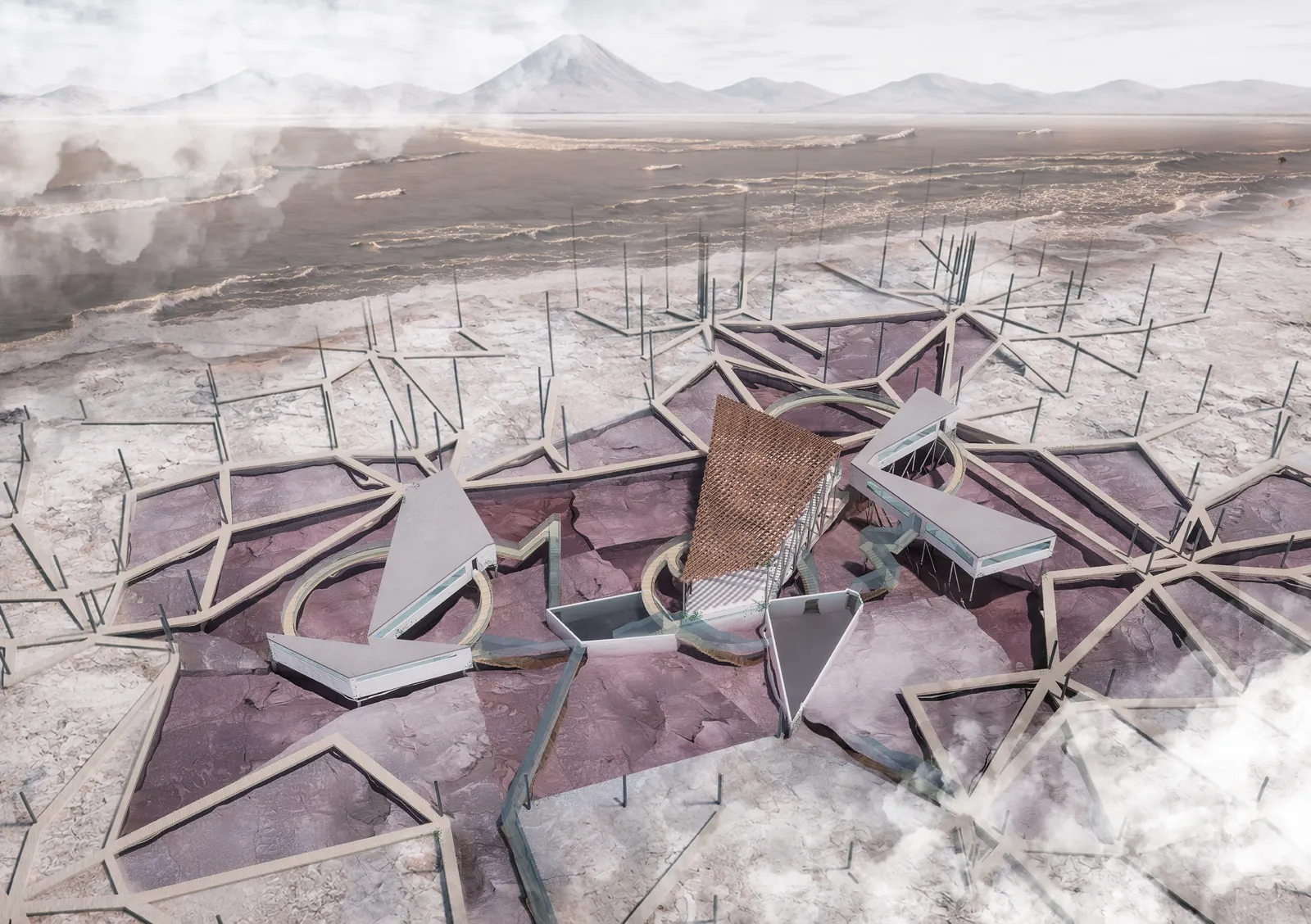
A research and sonification network on the shoreline of a lake that keeps disappearing — turning invisible contamination into sound.
View projectArchitecture student · Tashkent
Architecture, perception and public space
I study how light, scale and spatial organization shape the way people feel — and design places that make invisible conditions perceptible.
Architecture is how a place speaks to us. I want buildings that let people hear a poisoned lake, and bridges that connect a town with its memory.
A research and sonification network on the shoreline of a lake that keeps disappearing — turning invisible contamination into sound.
View project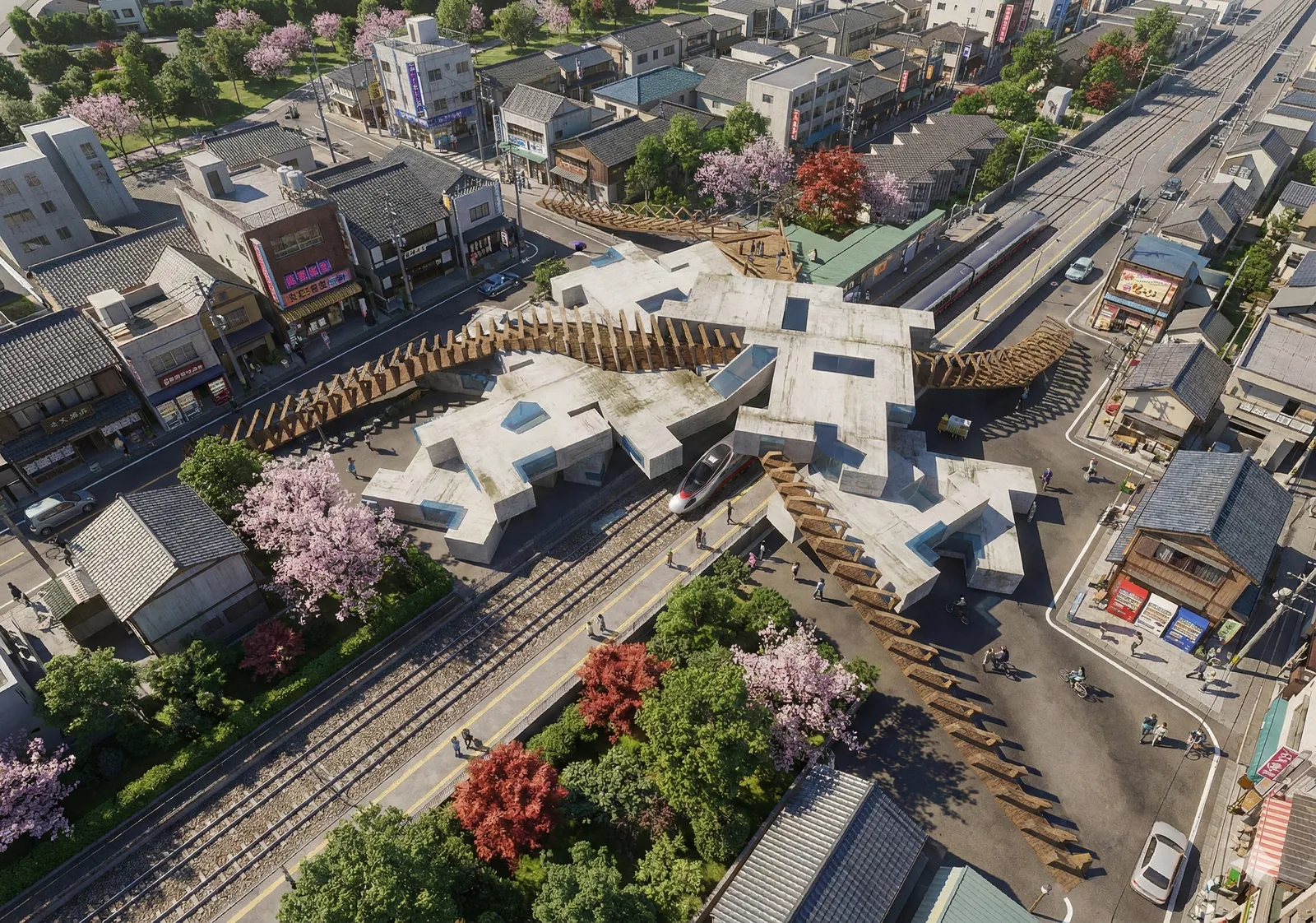
A social facility built over a railway line for people living with the legacy of Minamata disease — «Everything can be overcome».
View project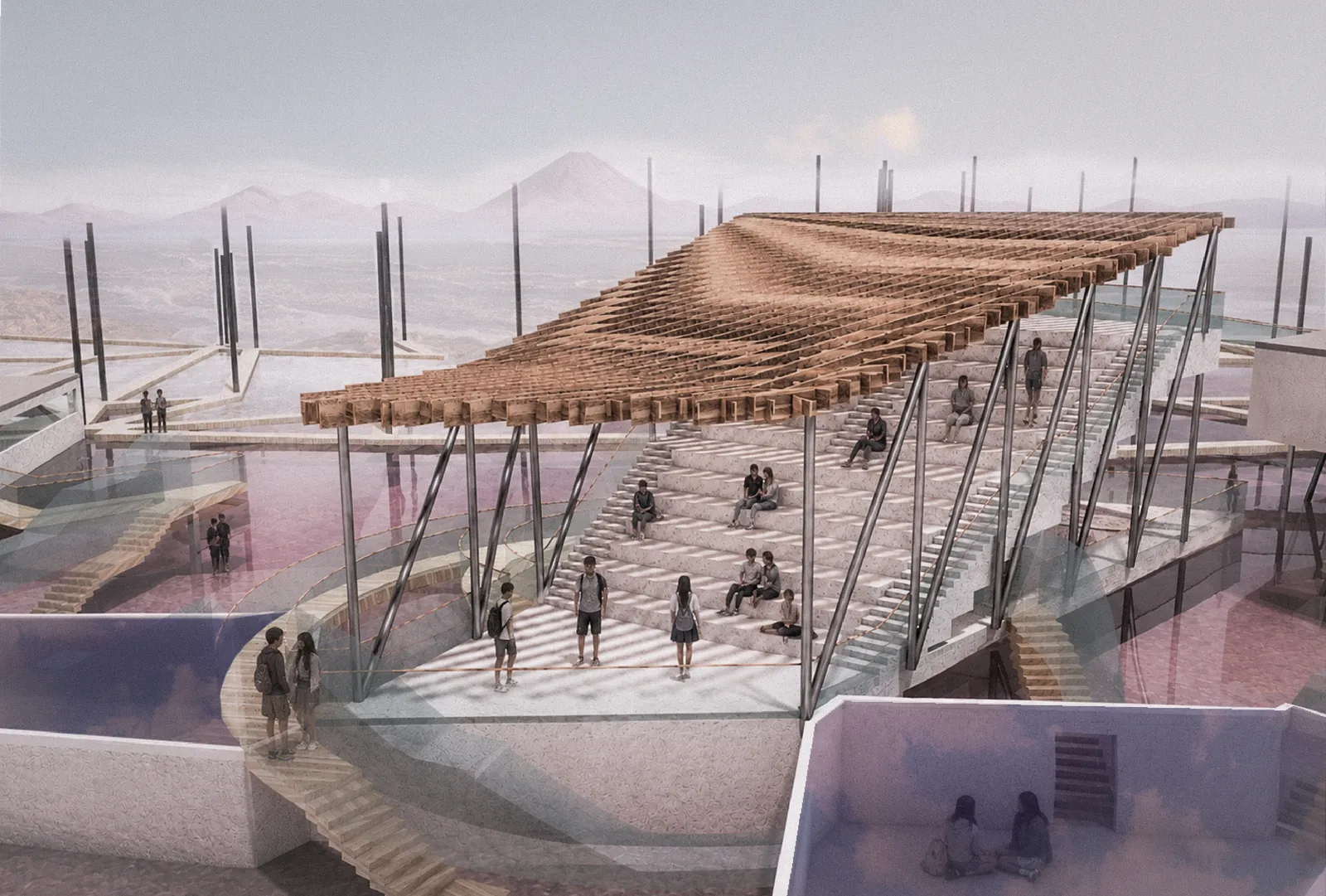
Your device cannot show the 3D scene — here is the project render instead.
A procedural 3D study of the Pain Sonification site: boardwalk grid, concrete volumes and sonification towers. It is a schematic model built for this site, not the exact project drawings.
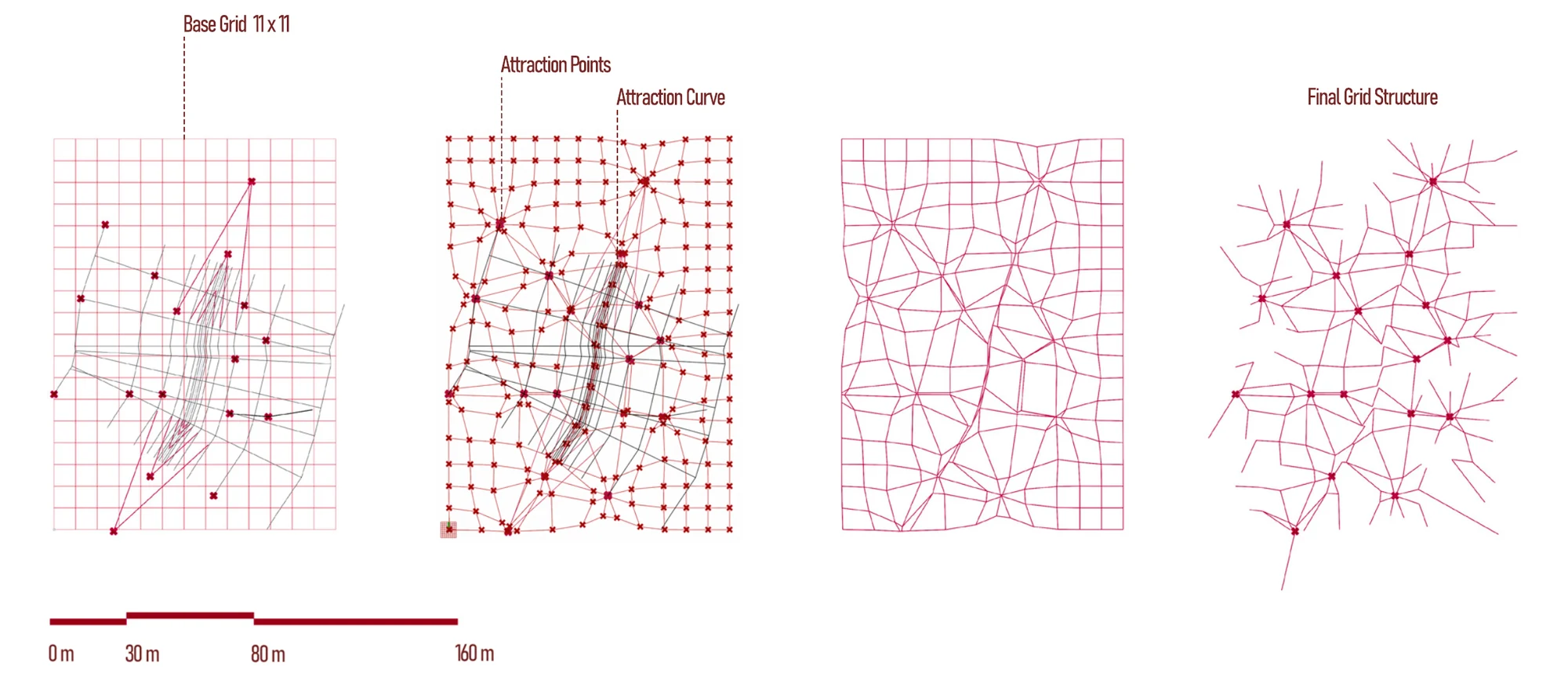
The lake dried and returned in cycles — its unstable shoreline became the generative grid.
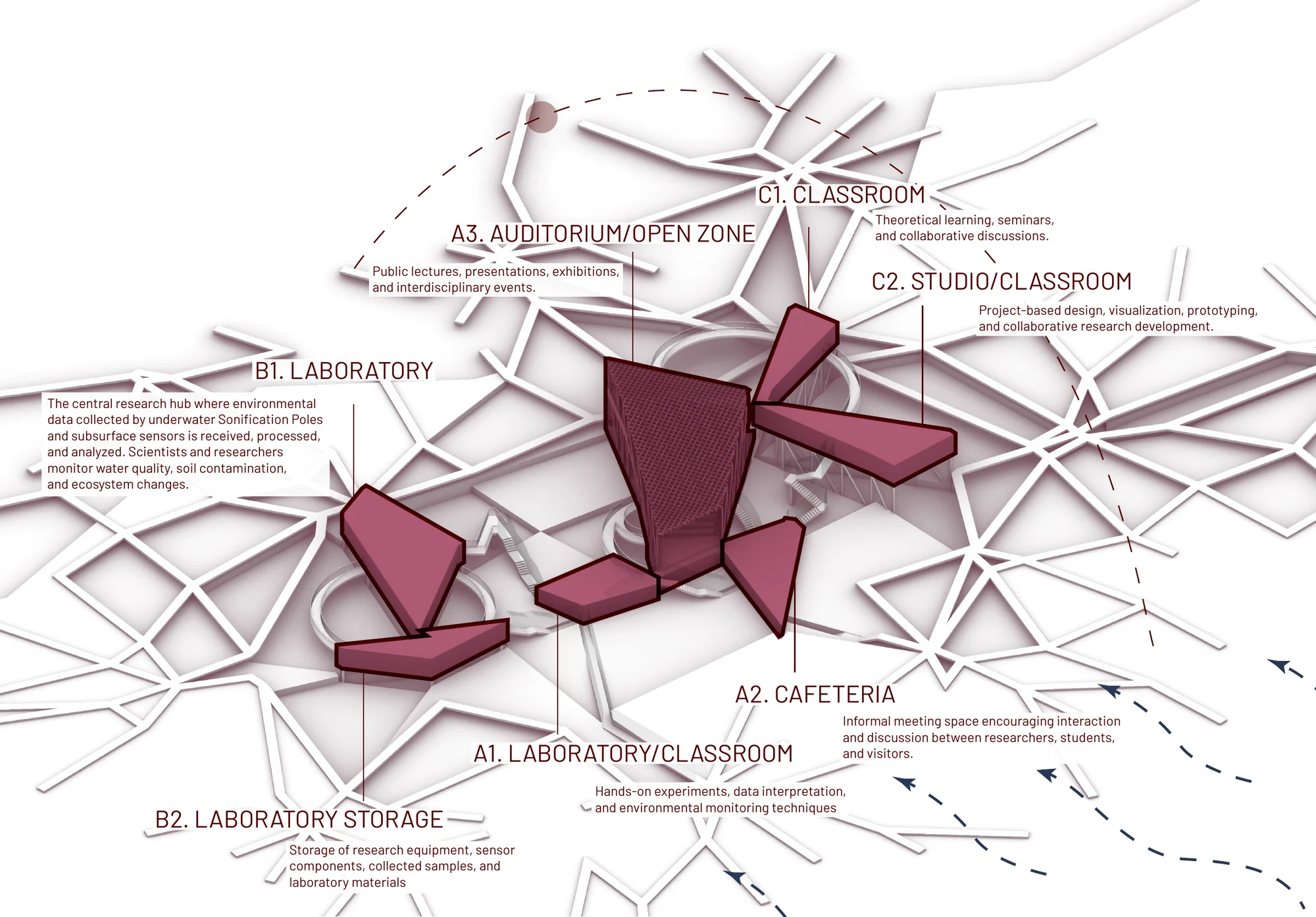
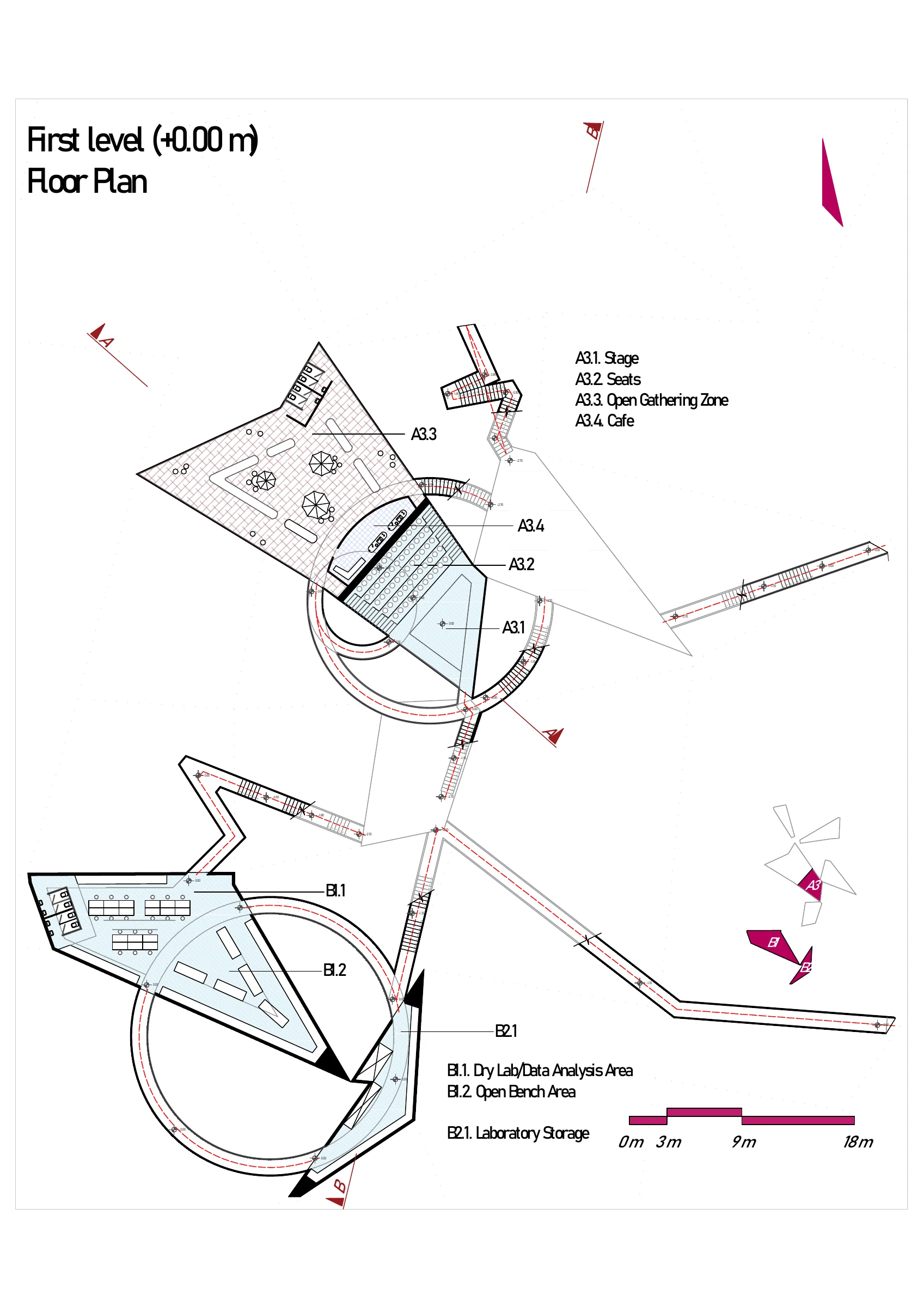
Platforms connect laboratories, classrooms, an auditorium and a constructed water basin.
Sonification Towers sense soil and water and turn every reading into tone.
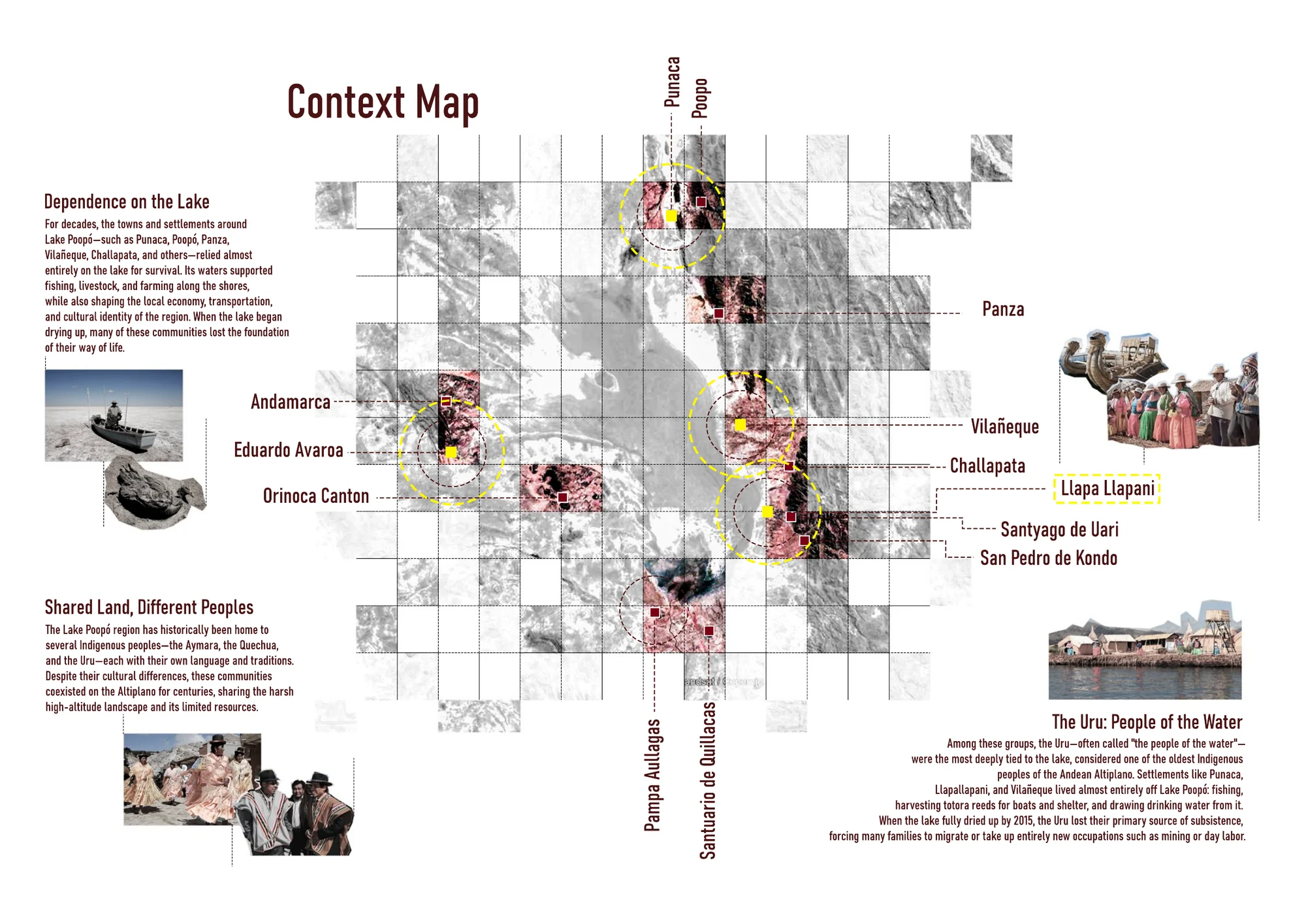
Lake Poopó nearly dried up in 2015 and cycles every 20–40 years. Arsenic and heavy metals from mining poison the soil; the Uru-Murato, «people of the water», lost their livelihood.
The lake’s unstable historic shoreline is used as the generative grid for boardwalks and volumes.
Triangular volumes grow from the grid, some above the water, some below it, linked by ramps and bridges.
Cafeteria, auditorium, laboratories, dry lab, storage, classrooms and studios, plus a constructed water basin.
Third-year architecture student at TOBB ETU University in Tashkent (GPA 3.5 / 4.0). I spent twelve years of my schooling in Japan, speak Japanese natively (JLPT N1) and carry out independent research on the psychological impact of architectural environments on perception.
I am open to internships, studio and competition teams, and visualization or documentation support — and to projects where Japanese, Russian, English or Uzbek is needed.
Based in Tashkent, Uzbekistan. The quickest way is to call or message.
+998 90 123 69 10 amirasayit2017@gmail.comTashkent, Uzbekistan